

The Evidence for Interactive Learning

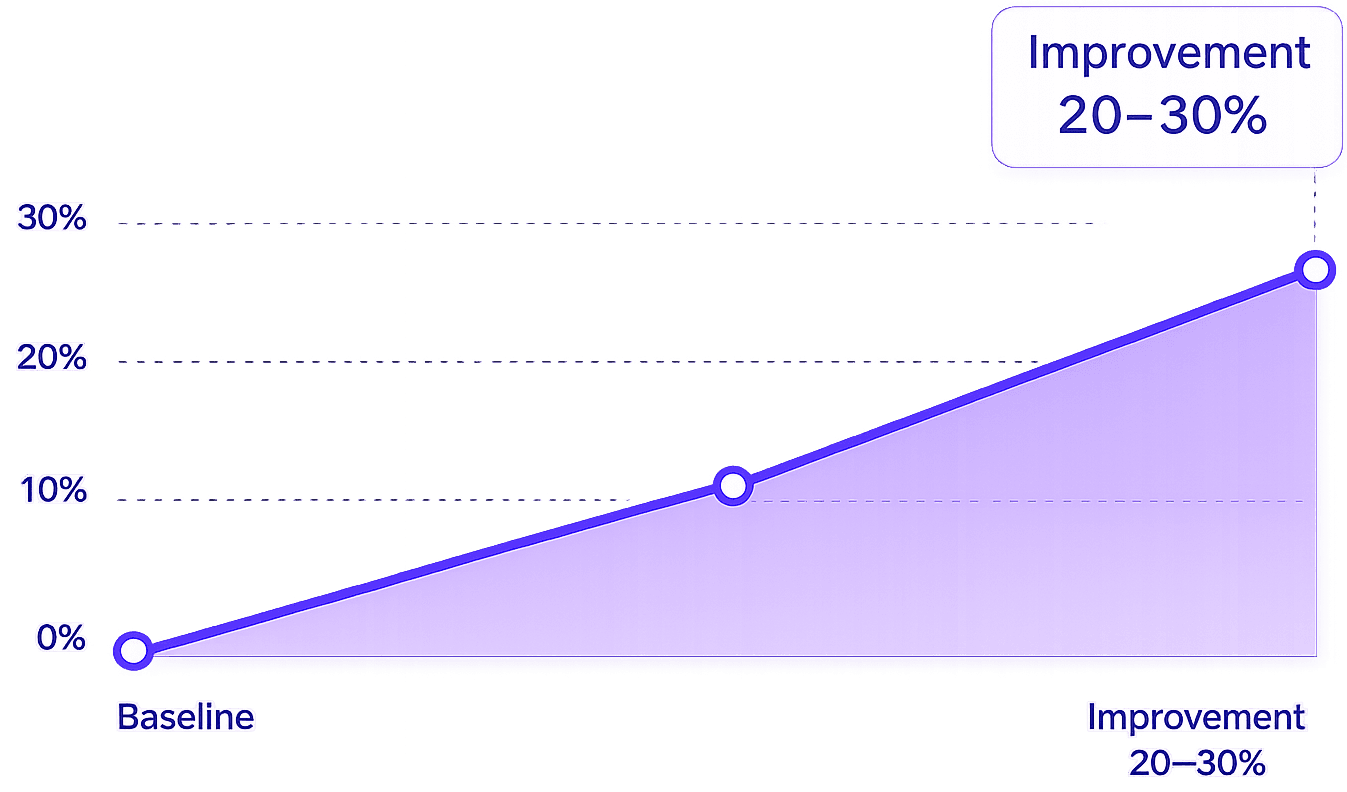

The shift is not cosmetic. Interactive content changes the structural relationship between learners and material.
Before
Passive learning
Static, passive content with no feedback loops
Low learner engagement and declining attention
No visibility into what content is working
Poor retention — learners disengage without active recall
Manual, fragmented content creation across tools
SCORM-based workflows with high maintenance overhead

With H5P
Active learning
Interactive content with real-time feedback
Measurably higher motivation and satisfaction
Analytics and insights built into the LMS
Active recall patterns that support retention
No-code authoring — faculty-led, no bottleneck
Native LMS integration — no exports, no re-uploads

Trusted by leading institutions
Evidence from research translates to evidence from practice.



“H5P enables academics to create engaging learning experiences without relying on specialist technical teams.” Michael Sturmey - Victoria University, Australia
As hybrid and digital learning mature, institutions are increasingly accountable for learning quality, accessibility and demonstrable outcomes. Adoption driven by novelty is no longer sufficient.
"H5P is an ideal tool for education because it keeps the students engaged, and it allows me to add an element that is just purely for practice." Dr. Simon Lolliot - University of British Columbia, Canada
We work with Centers for Teaching & Learning, academic leadership and digital learning teams to understand your institution's context before making any recommendations.
La investigación detrás de los números
Todas las estadísticas citadas en esta página provienen de estudios revisados por pares. Las referencias completas se enumeran a continuación.
Motivation & Satisfaction
2025
Active Learning in Open Digital Textbooks: Designing for Learner Engagement and Motivation using H5P
Theresa Huff & Daphne Ching Yu Tseng — University of North Dakota
TechTrends, Springer Nature, December 2025
RCT, n=294. Experimental group showed significantly higher motivation scores (d=0.55), with notable improvements in Relevance (d=0.65) and Satisfaction (d=1.01) subscales. Targeted performance improvements also observed on specific knowledge questions (d=0.44–0.45).
Engagement & Cognitive Load
2023
Harnessing H5P for Asynchronous Active Learning
Nguyen Bui & Claire Brooks — Australian National University
ASCILITE 2023 Conference Companion Materials
Examines H5P's potential to promote active learning in online asynchronous environments without increasing cognitive load. Grounded in established active learning frameworks (Bonwell & Eison, 1991).
Satisfaction & Engagement
2024
Midwifery student engagement with digital interactive books: A cross-sectional survey
Keedle et al. — University of Queensland
PubMed / NCBI (PMID: 39278054)
Cross-sectional study on student engagement with H5P-enhanced digital learning resources in a health sciences context. Findings indicate high engagement without increased cognitive burden.
Performance
2024
Interactive H5P content for increased student engagement in a dental hygiene program
Sharmin et al. — University of Dhaka
PubMed / NCBI (PMID: 38974825)
Investigates the effect of H5P interactive content on engagement and learning outcomes in a healthcare education setting. Reports measurable improvements in student satisfaction and performance indicators.
Performance & Skills
2024
Development of H5P Moodle-Based Interactive STEM-Loaded Videos to Grow Performance Skills
Susanti et al. — Universitas Negeri Malang
ResearchGate, 2024
Quasi-experimental study in STEM education contexts. Interactive H5P video content showed improvements in performance skills and was effective in addressing learning loss post-disruption.
Engagement
2024
Igniting student engagement: H5P’s transformative potential in higher education
Ramos-Azcuy et al. — Pontificia Universidad Católica del Ecuador (PUCE)
PUCE Investiga, peer-reviewed, 2024
Quasi-experimental pre/post design, n=87 undergraduate students. H5P significantly improved conceptual understanding, knowledge application, and enjoyment. Note: authors observe effectiveness is greatest when integrated into a broader instructional design strategy.