Interactive Learning at the Heart of Course Design
How South Texas College used H5P to transform static courses into interactive, accessible learning experiences at scale.

10hrs → 10min
Estimated time saving per content piece using Smart Import
200 courses
Converted from publisher materials to OER
6,500 courses
Running each semester — updated centrally using H5P
Challenge: From static content to active learning, at scale
South Texas College's (STC) Digital Learning team faced a significant undertaking: convert 200 courses from publisher materials to open educational resources, with a team of four instructional designers and three course developers. The courses being replaced relied on static PDFs, PowerPoint files and Blackboard's native assessment tools. They were functional but offered students limited opportunity to actively engage with material.
For STC's student population, that gap mattered. The college serves dual credit students — high schoolers taking college courses — alongside a significant proportion of adult returners: students who completed high school, built careers and families and are coming back to education after a decade or more away. Many of them access course content from their phones. Static, desktop-first content was a poor fit for how these learners lived and studied.
STC had previously used Adobe Captivate to produce interactive content, but access was restricted to the instructional design team and licences were scarce. Faculty couldn't use it without a technical background. For an institution running 6,500 courses a semester, it was not a workable model for scaling engaging content across the college.
Solution: Putting interactive content creation in faculty hands
South Texas College adopted H5P as the foundation for its OER course conversion. They were initially drawn to the product by Smart Import — a feature that helps faculty and instructional designers efficiently convert existing instructional materials into interactive H5P content, supporting scalability and consistency in course development. For a small team with a large conversion project, the productivity gains were immediate. Content that previously took up to 10 hours to produce could now be done in around 10 minutes.
H5P also extended that capability well beyond the instructional design team.
Rather than treating it as an optional add-on, STC embedded H5P directly into its master course development model — a broader redesign initiative focused on accessibility, engagement and consistency across online courses. Faculty encountered H5P activities within the actual teaching workflow from the outset, which drove organic adoption across departments. The Digital Learning team supported that process through instructional design collaboration, demonstrations and workshops, one-on-one consultations, template integration within master course shells, and examples of interactive activities aligned with QM and accessibility standards.
Faculty across Chemistry, Mathematics, Health Sciences, History, English, Workforce and Nursing programmes can now build interactive content without any programming knowledge — and once they see examples already embedded in course shells, adoption tends to follow naturally.
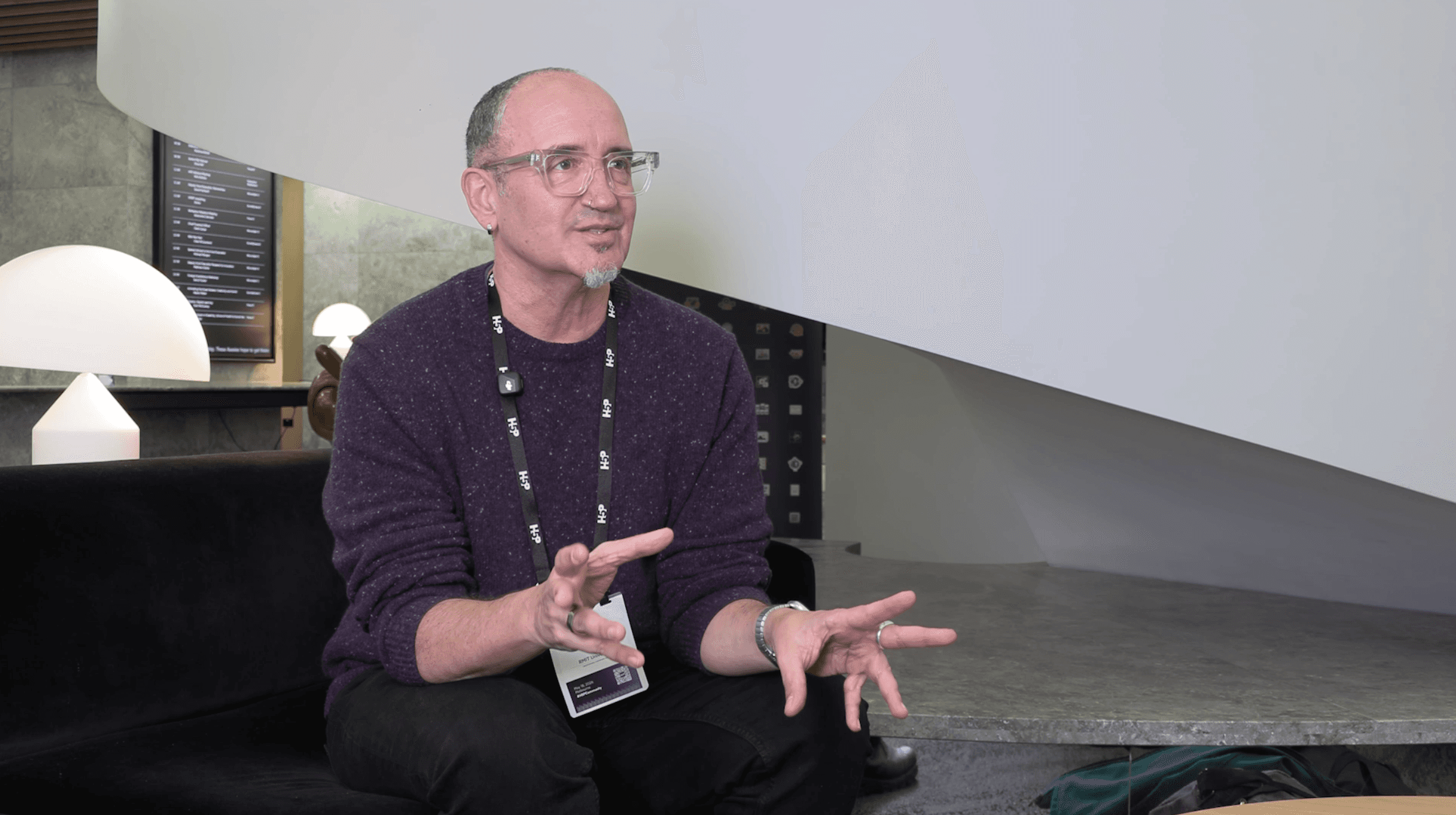
"They don't need any programming skills. [H5P] makes a big difference right away."
Dr. Andrés Padilla-Oviedo, Instructional Designer, South Texas College
As adoption grew, STC embedded H5P into its master course model—standardized templates used across multiple sections—where lead faculty now develop and update content independently. The instructional design team's involvement in routine content production has reduced, freeing capacity for higher-value work.
H5P has also supported STC's Quality Matters programme certification, achieved across four programmes. Interactive content types help satisfy QM's standards for learner engagement and instructional alignment, making it easier to evidence quality across programmes at scale.
Accessibility: built in, not bolted on
Accessibility sits at the centre of STC's digital learning strategy. The college targets 95% accessibility scores through Blackboard Ally—well above the 85% threshold Quality Matters typically requires.
Before H5P, maintaining that standard was labour-intensive. Every course on the platform contained its own copies of essential institutional content—technical support information, privacy policies, vendor statements, college policies—embedded as individual files. When anything changed, the team had to locate and update each one manually. Across 6,500 courses running each semester, that was neither efficient nor sustainable.
South Texas College solved this by using H5P to create the policy and compliance items within its 'Start Here' module, an introductory section that appears at the beginning of every course. Because these items live in H5P, a single edit updates every instance across the entire platform simultaneously. What previously meant hunting through hundreds of course files now takes minutes.
"Before was crazy — we had to change [the content] in so many places. It was taking forever. With H5P, we can be confident that accessibility is there."
Dr. Andrés Padilla-Oviedo, Instructional Designer, South Texas College
For STC's students, that confidence translates directly into a better learning experience. H5P's mobile-responsive content means interactive activities are accessible on a phone—important for dual credit learners and adult returners alike, many of whom rely on mobile as their primary device.
Results: stronger engagement, a platform for continued growth
South Texas College believes the impact goes further.
H5P has been integrated into a large portion of the college's redesigned online master courses, with faculty adoption continuing to grow as instructors encounter it embedded in course shells and request its expansion into additional programmes. The content types seeing the most active use — Interactive Books, Knowledge Checks, Interactive Videos, Accordions and AI Conversations — reflect a shift towards richer, more varied learning experiences rather than simple substitution of static materials.
Faculty feedback on student interaction has been consistently positive, and continued expansion requests from departments have become one of the clearest signals of institutional value. Formal before-and-after performance data is still being gathered, but the college expects higher engagement to show through in retention and passing rates — a connection the research literature on active learning supports clearly.
South Texas College continues to expand H5P use across more programmes and more faculty, while keeping close watch on emerging AI interaction features that could enable students to engage verbally with course content.
When asked what South Texas College would tell a peer institution considering H5P, the answer was direct: "It makes a big difference—it helps with quality assurance, alignment between objectives, instructional materials, assessments, accessibility. I think it's a great tool."